By Caroline Washaya-Moyo
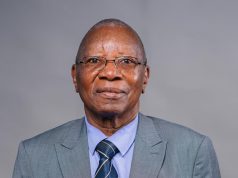
FINANCE, Economic Development and Investment Promotion Minister Professor Mthuli Ncube has called for increased investment in Zimbabwe’s tourism sector, saying the country must move beyond viewing tourism simply as a source of visitors and instead build an investment-driven tourism economy.
Prof Ncube made the remarks while officiating as Guest of Honour at the Sanganai/Hlanganani/Dzimbahwe Tourism Investment Forum held at the Gymkhana Events and Conference Centre in Masvingo.
The forum brought together Government, investors, tourism operators, financial institutions, development partners and project promoters to explore opportunities for accelerating investment in the tourism sector.
Prof Ncube said tourism remained a strategic pillar of Zimbabwe’s economic transformation and an important contributor towards the attainment of Vision 2030 and the objectives of the National Development Strategy 2 (NDS2).
He said Zimbabwe’s tourism sector had demonstrated strong recovery following the devastating effects of the COVID-19 pandemic, with international tourist arrivals and tourism receipts showing significant growth.
“Tourism is not only about tourism. It is also about technology. Tourism is not only about infrastructure, it is also about finance, entertainment, culture and creativity,” he said.
Prof Ncube said tourism had strong linkages with virtually every sector of the economy, including agriculture, transport, construction, finance, technology, culture and creative industries.
He said investment in tourism therefore created demand across the wider economy, generating opportunities for local businesses, communities, young people, women and small enterprises.
“Not only do you invest in tourism, but you invest across the entire economy,” he said.
According to Prof Ncube, Zimbabwe recorded tourism receipts of US$537 million in the first half of 2026, compared to US$580 million recorded during the corresponding period in 2025, while the sector continued to attract increasing numbers of international and domestic travellers.
He said the tourism investment forum provided an important platform for connecting capital with viable investment opportunities.
“This investment forum will help us to connect capital with opportunity. The projects, ideas and implementation will help us ensure that tourism gets access to the resources required,” he said.
Prof Ncube also highlighted the growing participation of pension funds, institutional investors, local companies and international hospitality groups in Zimbabwe’s tourism sector.
He said the increased interest demonstrated that tourism was increasingly being recognised as a viable long-term asset class.
The Minister said Zimbabwe had already attracted more than US$1 billion in tourism-sector investment between 2021 and 2025, while approximately US$500 million worth of hotel infrastructure projects and large-scale developments were in the pipeline.
He said the country must now broaden its investment proposition beyond hotel accommodation to include conference and exhibition facilities, transport, restaurants, retail, recreation, healthcare and other tourism-related infrastructure.
One of the major opportunities highlighted by Prof Ncube was the development of the 1 200-hectare Special Economic Zone in Victoria Falls, which he said presented an opportunity for an integrated tourism and business development incorporating hotels, villas, residential developments, social amenities, medical facilities and other supporting infrastructure.
He said the development of medical facilities was particularly important for an international tourism destination such as Victoria Falls, where visitors require access to high-standard healthcare services.
“We need a high standard of facility to support tourists,” he said.
Prof Ncube said Zimbabwe should also explore integrated investment propositions around its major tourism attractions rather than concentrating solely on attracting tourists.
He said destinations such as Victoria Falls and Great Zimbabwe should be developed as comprehensive economic ecosystems encompassing hospitality, recreation, leisure, residential development, retail and other supporting services.
“The question should not simply be how do we attract tourists to come and go to Zimbabwe. How do we build an investment destination around tourism? This is the most important part to unlock the next generation of tourism prospects,” he said.
The Minister called for innovative financing models to mobilise long-term capital into the sector, including pension funds, private equity, investment banks, international investors, strategic partnerships and Real Estate Investment Trusts.
He said Government was committed to improving the investment environment and ensuring that viable tourism projects were matched with credible promoters, sound business models and appropriate financing structures.
“We must move from choice and process to better performance. A choice is not automatically invested. It requires a credible promoter, a sound business model, appropriate financials and a clear path to retain investment,” he said.
Prof Ncube also encouraged Zimbabweans in the diaspora to participate in the country’s tourism investment opportunities, saying diaspora capital could play an important role in expanding the sector.
He said investment should, however, be pursued alongside sustainability and inclusion.
“We must protect our natural resources and heritage, prevent declining resilience, use water and energy responsibly, and create opportunities for communities, young people, women, local entrepreneurs and small businesses,” he said.
Prof Ncube said the Government’s vision was to position Zimbabwe as a premier African tourism destination while ensuring that communities benefited directly from tourism-related economic activity.
The Tourism Investment Forum was held as part of the 19th edition of the Sanganai/Hlanganani/Dzimbahwe Tourism Expo, which is being hosted in Masvingo against the backdrop of the Great Zimbabwe Monuments, a UNESCO World Heritage Site.
The forum provided a platform for Government and the private sector to engage on investment opportunities and strategies for transforming Zimbabwe’s tourism potential into sustainable economic growth.