By Caroline Washaya Moyo
TRIANGLE — The rich history behind Zimbabwe’s sugar industry came alive as journalists participating in the ongoing Sanganai/Hlanganani/Dzimbahwe Tourism Expo visited the Murray MacDougall Museum in Triangle.
The visit was organised by the Ministry of Tourism and Hospitality Industry as part of efforts to showcase the diverse tourism attractions and historical heritage found across Zimbabwe.
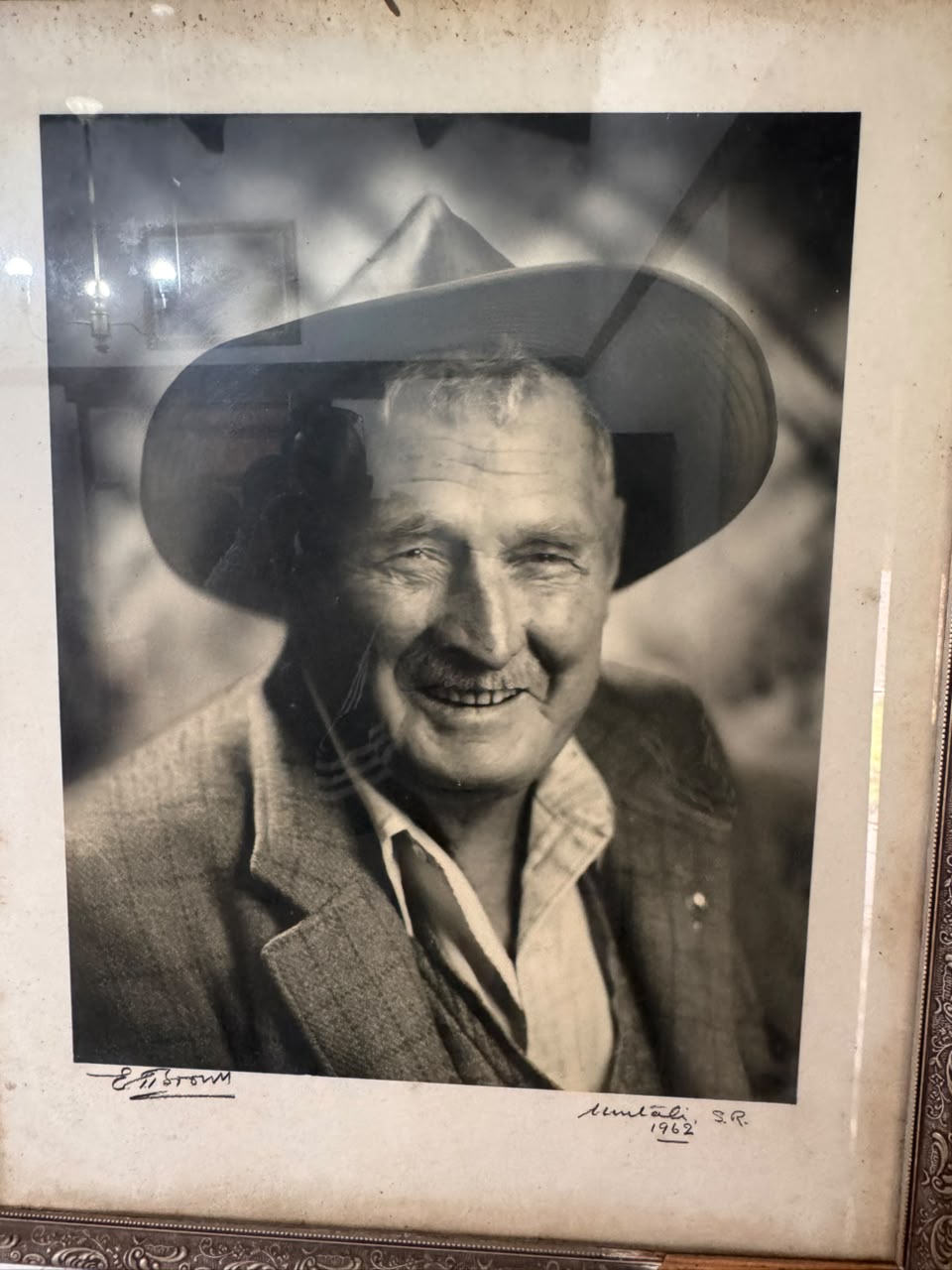
Members of the media were taken through the historic site by Mrs S. Mthombeni, who narrated the remarkable story of Scottish pioneer Thomas Murray MacDougall, whose agricultural experiments helped lay the foundation for the development of the Lowveld sugar industry.
MacDougall arrived in the area in 1906 and eventually settled there in 1908. Despite dropping out of school at the age of 10, he went on to become one of the pioneering figures in the agricultural development of the region.
His work was temporarily interrupted during the First World War between 1914 and 1918. Upon his return, he continued developing his homestead and experimenting with agricultural production. According to Mrs Mthombeni, MacDougall initially cultivated local grains before venturing into sugarcane production, a decision that would have a lasting impact on the economic development of the Lowveld.
He reportedly imported just three sticks of sugarcane from South Africa, establishing the foundation for sugarcane cultivation in the area.
MacDougall later became the first person to produce locally manufactured brown sugar, marking an important milestone in Zimbabwe’s agricultural and industrial history.
His first harvest produced approximately 90 tonnes of brown sugar, some of which was partially refined in Bulawayo at Gold Star Refineries.
However, financial difficulties and mounting debt eventually affected the pioneering venture, leading to the Rhodesian Government taking over the business.
The vast land associated with the development of the sugar industry, stretching from Triangle towards Hippo Valley, was later divided into different sections, contributing to the establishment of major estates including Buffalo Range, Hippo Valley and Triangle. These developments would ultimately transform the Lowveld into one of Zimbabwe’s most important agricultural and sugar-producing regions.
The historic site also provides insight into MacDougall’s personal life. He lived as a single man at the homestead for approximately 25 years before marrying at the age of 63, after leaving Triangle. He had no children. Beyond its historical significance, the site is surrounded by a natural environment that requires visitors to remain cautious.
Mrs Mthombeni advised visitors to be mindful of wildlife in the area, including venomous snakes, scorpions and large venomous spiders. A room on the property also contains bees, although they generally do not disturb visitors. She said visitors should immediately evacuate using designated pavements and assemble at the main gate should an emergency bell located on a tree ring.
Visitors were also advised to observe the colour-coded water taps, with water from the blue tap safe for drinking, while water from the red tap is not suitable for consumption. The inclusion of the Murray MacDougall Museum among attractions being showcased during the ongoing Sanganai/Hlanganani/Dzimbahwe Tourism Expo highlights the growing importance of heritage and industrial tourism in Zimbabwe.
The site preserves an important chapter of the country’s agricultural history while offering visitors an opportunity to understand how the pioneering efforts of one individual contributed to the development of an industry that continues to play a significant role in Zimbabwe’s economy.
The Murray MacDougall Museum therefore stands not only as a historical monument, but as a valuable tourism asset linking Zimbabwe’s past, agricultural heritage and future tourism potential.