The Chimanimani Lowveld area in Zimbabwe once a thriving and lush region, is now bearing the brunt of climate change. Rising temperatures and recurrent droughts have taken a devastating toll on the landscape, which was already characterized by low rainfall.
The effects are evident in the withered crops, parched earth, and dwindling water sources. Farmers who once relied on the land for their livelihoods are now struggling to make ends meet. The droughts have led to soil erosion, reduced fertility and increased sandstorms.
Livestock is struggling to find food and water, while the iconic baobab trees, once green and vibrant, now stand bare and lifeless.
Participatory Organic Research Extension Training Project Trust (PORET) is operating in that semi-arid region where they are urgently reaching out to farmers for a demonstration and learning centre to enable farmers to be equipped about climate change resilience practices.
PORET director Julius Pity highlighted that his organization is working with communities to support the development projects and learning sites to inspire farmers to adopt good practices on their lands.
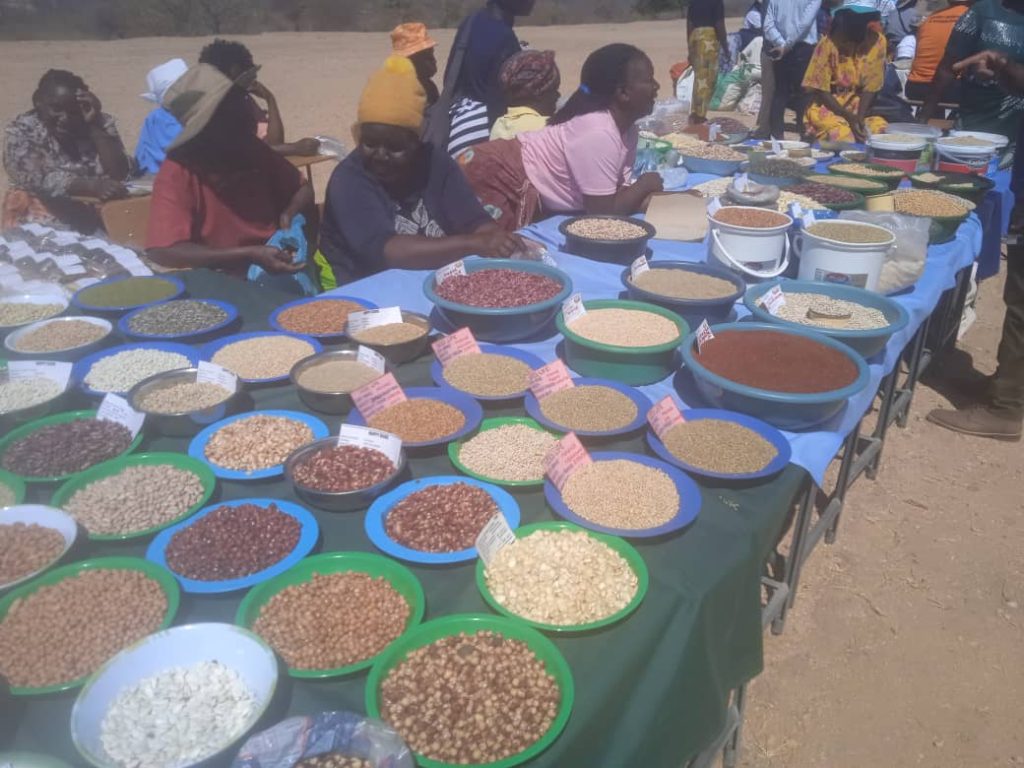
In an interview with this publication on the sidelines of a Food and Fair show held at Chakohwa high school last week, under the theme ‘Celebrating the diversity and resilience of Zimbabwean food and beyond’, Pity revealed that his organization desires to transform the lives of local communities through agroecology.
“We endeavor to empower communities through agroecology which does not need a lot of foreign tools for it to be successful. We need to have our farmers learn and learn a lot. We have organized this Food and Fair show which is a springboard four our farmers to be networked. It is vital that we work towards climate change adaptation and together with stakeholders develop and strengthen adaptive capacity to help farmers, communities and strengthen resilience of the land.
“We educate farmers about climate change and its impending effects, offering courses such as Permaculture Design Course that offer practical solutions of climate change adaptation and mitigation. Slowing down runoff and sinking rainwater into the ground by construction watershed management schemes such as dams, swales, catchment pits and gabions. This creates and prolongs supply of water in the land for crops and natural vegetation to grow. Developing farmer seed systems with a focus on small grains and organizing village and district seed fairs and festivals. It is PORET’s plan that every homestead has a seed bank of indigenous seeds.
“In Chimanimani area we have Umvumvumvu, Nyanyadzi and Changadzi rivers that provide water for irrigation purposes. These rivers have become dry and our farmers have now become desperate. We did a survey and we aim to reach underground water that we should preserve amounting to 50 000 million litres. This water will be used to bring back life on our already dried rivers and it requires four years for this be successful. We have already trained about 150 farmers and are preparing their plants, explained Pity.
Speaking at the same occasion Minister of State for Manicaland Provincial Affairs and Devolution Misheck Mugadza weighed in saying Government was ready to partner Non-Governmental Organizations (NGO) that offer sustainable livelihood solutions to marginalized communities.
“We are not just celebrating food but we are honoring the enduring spirit of Zimbabwean agriculture, the recovery of our lost seeds and recovery of traditional crops in the face of climate. It is not only a reflection of our rich food heritage but also a tribute to the on-going efforts to reclaim and promote our traditional seeds and crops. These seeds are the cornerstone of our agricultural resilience. Traditional grains have once more gained support from Government’s vision of ensuring food security for all through revival of these lost seeds,” highlighted Mugadza.
PORET operates in semi-arid parts of Zimbabwe and being in climatic zone 5, the organization has embarked on constructing a comprehensive water harvesting system that aims to slow the flow of water over the landscape when it rains, through a systems of swales and dams, to sink the water into the soil.
More support and resources are needed to help this vulnerable region build a sustainable future. As the temperatures continue to rise and droughts persisting, the Chimanimani Lowveld area stands at a crossroads.